Steven Baingana, a farmer from Uganda, is very happy with his biodigester. The bioslurry has been incredible for his coffee and bananas, leading to heavier coffee beans and plants that are always green. Even during the flowering season, the flowers don’t fall off, and the plants don’t wither. “Bioslurry has helped us a lot,” he says.

In Bogossoni village, Mali, Namakolo Mounkoro shares how a biodigester—introduced through the Pro-ARIDES and African Biodigester Component (ABC) projects—has transformed her daily life. No longer cooking with wood, Namakolo now enjoys a cleaner, faster, and smoke-free kitchen. The biodigester not only saves her time and improves her health, but also produces rich compost that boosts her rice, fonio, and vegetable crops while supporting her livestock. “This technology has changed our lives. I’ve become stronger, more independent, and more respected in my community,” she says.

Awali Abdoul aziz, a farmer from Doumaiga, Niger conducted a simple but effective experiment on his peanut and bean field. He prepared two adjacent plots, where bioslurry enriched compost is applied in one and  organic household manure in another. Awali explains that the observation is clear. The part where bioslurry enriched compost was applied has better growth of peanut and beans.

A farmer from Uganda, who has been using a biodigester since 2007, shared how bioslurry has transformed his farming practices. He applies the bioslurry to his coffee and banana crops and also mixes it with maize bran to feed his pigs. He finds bioslurry easy to use and appreciates that it remains in the soil for a long time, improving soil health and fertility over time. Unlike chemical fertilizers, which he believes damage the soil, bioslurry supports long-term soil productivity.

As part of the ABC Program, Evelyn Muhinu visited a farm in Kenya where she observed remarkable improvements in coffee and other crops through the use of bioslurry. The farmer no longer needed mineral fertilizers. The contrast between the fields treated with bioslurry and those using mineral fertilizers was striking in both yield and soil health. This experience inspired Evelyn to install her own biodigester. Since then, she has seen noticeable improvements in her own orchard.

Wakinya Samuel, Chairperson of Bushika Integrated Area Cooperative Enterprise Ltd., is transforming coffee farming through biodigesters technology. He appreciates the support from Biogas Solutions Uganda Limited, Hivos, SNV, and ABPP. His farm now uses pipes to distribute bioslurry. This simple but powerful innovation has reduced labor, improved efficiency, and allowed the cooperative to grow organic coffee that meets market standards. For Samuel, it’s more than just farming, it’s a step forward in the fight against climate change.

A coffee farmer in Uganda, who manages a farm of over 6 acres, uses bioslurry to increase his crop quality and yield. The bioslurry helps the soil to heal and become rich, leading to a healthy, high-yield coffee harvest that is more appealing to buyers.

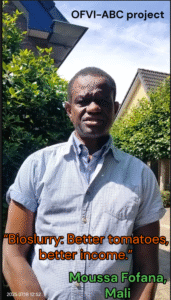
Moussa Fofana, a biodigester user from Mali, shares how applying bioslurry improved his tomato harvest.

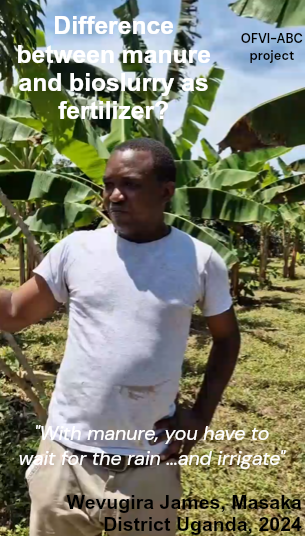
Farmer Wevugira James, Uganda: difference between using manure or bioslurry as fertilizer

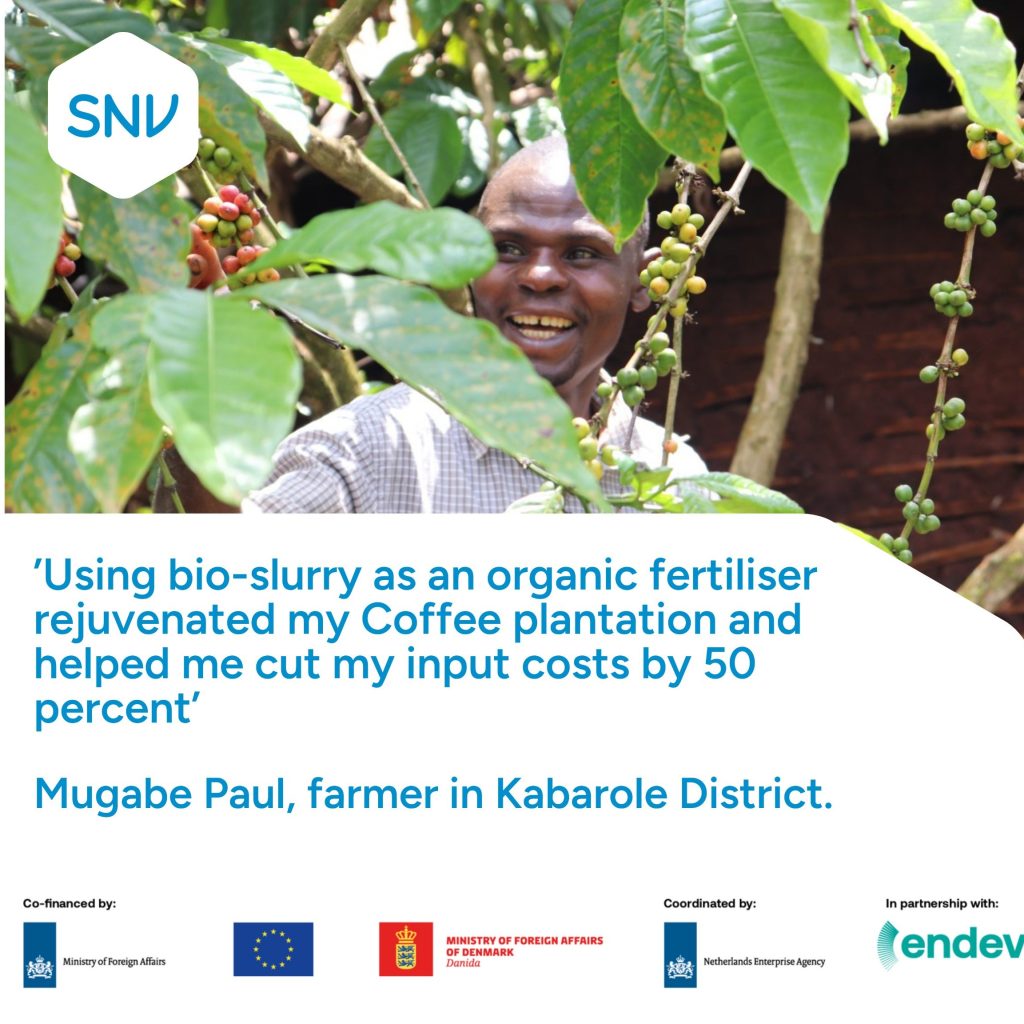
Bio-slurry rejuvenated my coffee farm and cut my input costs by 50% – Mugabe Paul, farmer in Kabarole District.